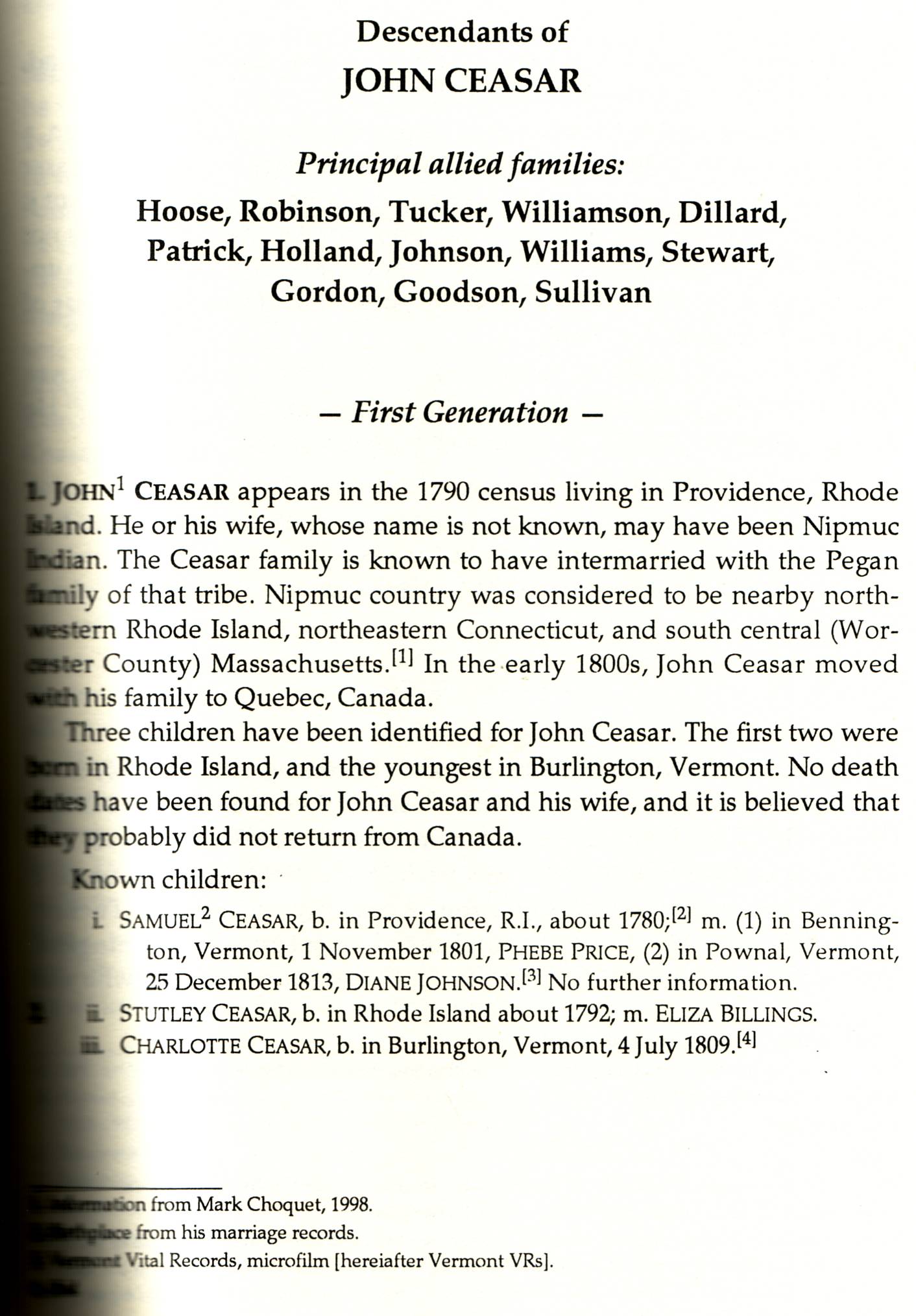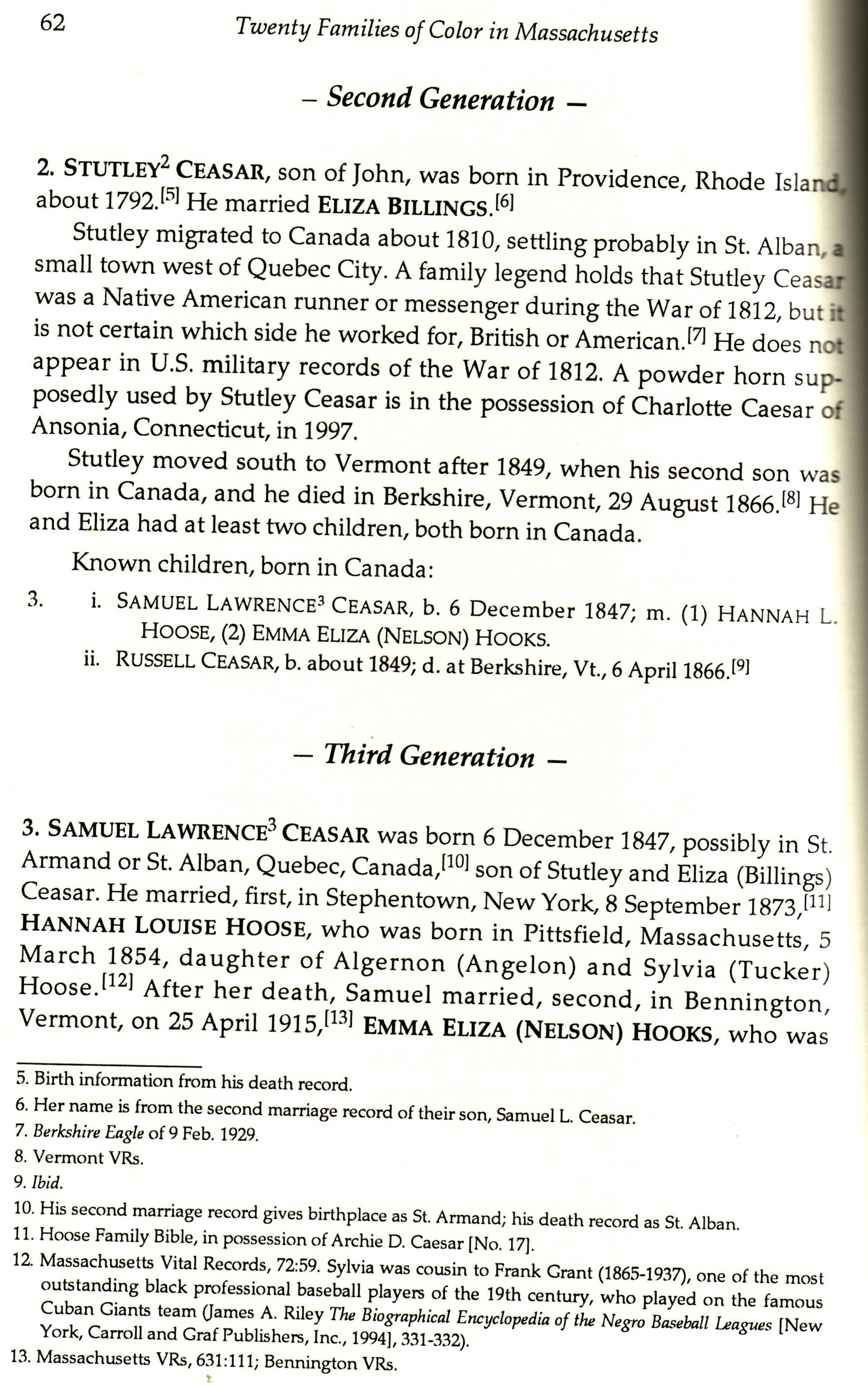
Our speculation is that John Ceasar was likely born shortly before the Anglo-French and Indian War formally ended in 1763 and fathered his first son Samuel Ceasar abt. 1780. He may have been the son of a Native or White father and an enslaved African mother.
The fact that he relocated with his family to Quebec Canada around 1800 indicates that he likely did not serve in the Continental Army nor receive a subsequent military land warrant for his service; albeit he may have received his freedom from slavery beginning in 1777 when Vermont became the first New England state to end the godless practice.
The possibility exists that he was a British loyalist during the war and received a land warrant in Canada from the British Crown government for his service. It was a common process for men who served either the American or British cause to petition for benefits after the war, and land grants was considered as payment in kind.
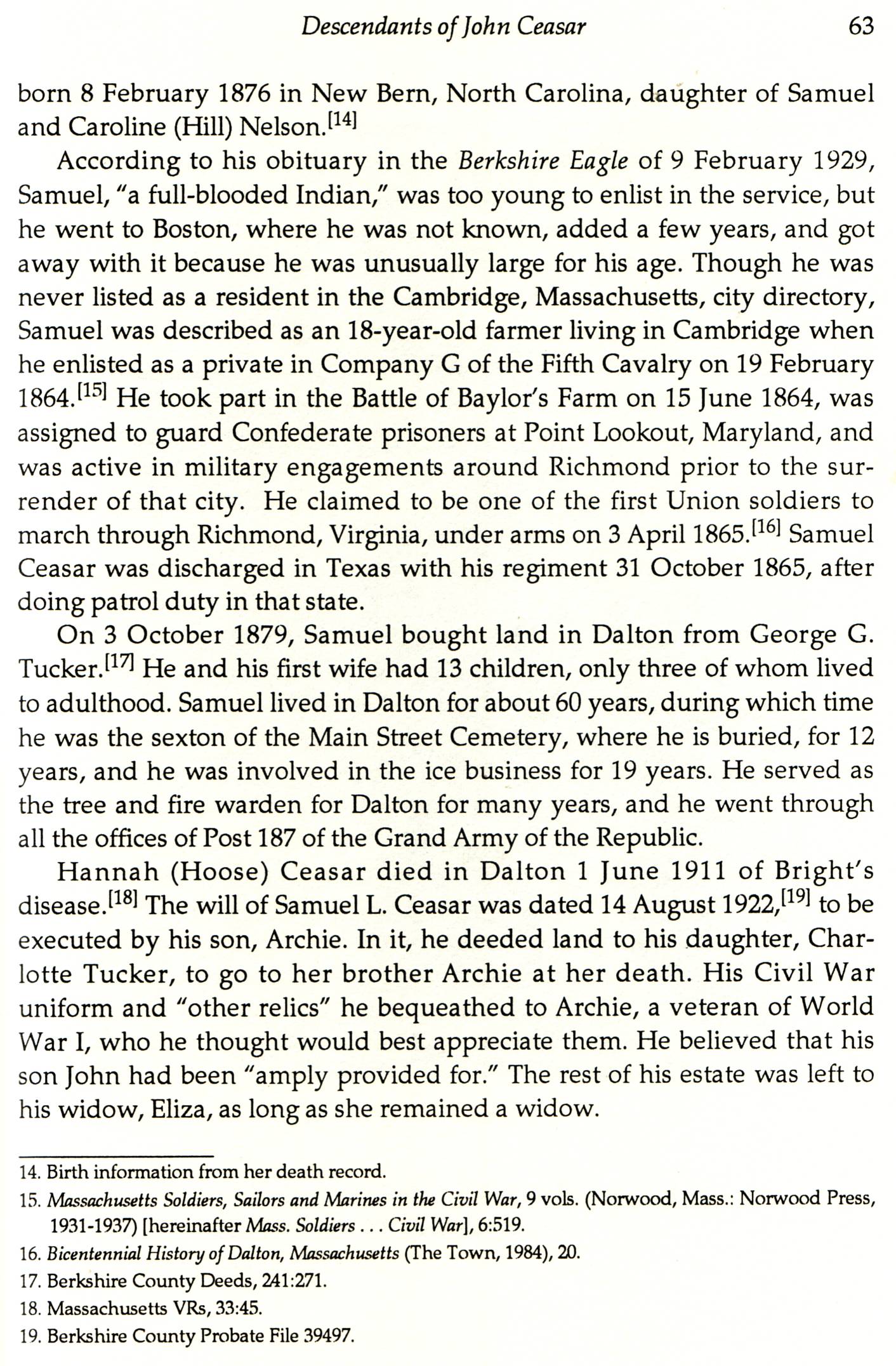
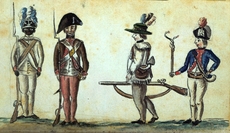
Ideals of the first American Revolution and war-time service during period 1775-1783 so far as some young men of African heritage were concerned, ... proved that freedom from slavery was not to be given and would require affirmative actions of a second revolution to be achieved. Most Black and White residents, free and slave, did little or nothing for either side during course of the bitter struggle; but, about 300,000 young White, Native, Mulatto and Black men were enlisted in the ranks of George Washington's Continental Army. It was a very bloody and hard-fought war covering thousands of square miles with thousands of patrols, raids, skirmishes, battles and campaigns during the long days and nights between beginnings at Bunker Hill in 1775 and ending at Yorktown around 1782.
Most African-American young men, about 25,000 volunteers, had joined and supported the British loyalist cause which promised them freedom; and, many were able to achieve it by doing so but not much else. On the other hand, about 5,000 African-Americans supported the colonial rebels and again some achieved personal liberty by that course of action; but, most young bucks were sorely disappointed and returned to slavery when the war was won.
By time of the first United States census in year 1790, the new constitution was in effect and people of African heritage whether born free, born slaves or being imported as slaves were deemed to not be citizens of the new nation though accountable as three-fourths of a person for purposes of election districts that would give southern slave owning states a long-standing advantage.