























































See also: Indian Territory in the American Civil War
American Civil War (1861)
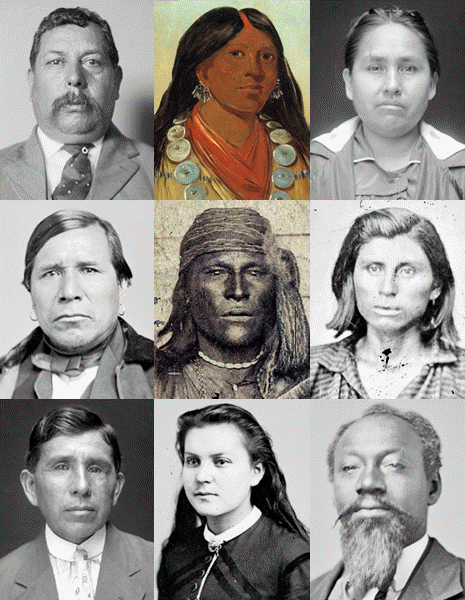
On eve of the beginning of the Civil War, there were millions of Americans of native heritage, millions more of African heritage and the vast majority being of European heritage all of which combined during generations 55 to 63 to propagate a diverse population in looks, attitudes and behaviors. The war was about power over human life versus empowerment of it.
At the outbreak of the American Civil War, Opothleyahola refused to form an alliance with the Confederacy, unlike many other tribes, including many of the Lower Creeks. Runaway slaves, free blacks, Chickasaw and Seminole Indians began gathering at Opothleyahola's plantation, where they hoped to remain neutral in the conflict between the North and South.
On August 15, 1861, Opothleyahola and tribal chief Micco Hutko contacted President Abraham Lincoln to request help for the Union loyalists. On September 10, they received a positive response, stating the United States government would assist them. The letter directed Opothleyahola to move his people to Fort Row in Wilson County, Kansas, where they would receive asylum and aid.[33] They became known as Loyalists, and many were members of the traditional Snake band in the latter part of the century.
Because the majority of the Creek did support the Confederacy, the US government required a new treaty with the nation in 1866 to define peace after the war. It required the Creek to emancipate their slaves and to admit them as full members and citizens of the Creek Nation. They were then known as Creek Freedmen. The US government required setting aside part of the Creek reservation land to be assigned to the freedmen. Many of the tribe resisted these changes. The loss of lands contributed to problems for the nation in the late 19th century.
The Loyalists among the Creek tended to be traditionalists. They formed the core of a band that became known as the Snakes, which also included many Creek Freedmen. At the end of the century, they resisted the extinguishing of tribal government and break-up of communal tribal lands enacted by the US Congress with the Dawes Commission of 1892.
These efforts were part of the US government's attempt to impose assimilation on the tribes, to introduce household ownership of land, and to remove legal barriers to the Indian Territory's achieving statehood. The Creek Nation was registered as individuals on the Dawes Rolls, which later was used as an important record for tracing and documenting tribal membership. European-American settlers had moved into the area and pressed for statehood and access to some of the tribal lands for settlement.